2016-07-11

Junk calls, TPS and DPA

If you want to avoid marketing calls, the "right" way to do it is to register the number with the Telephone Preference Service (TPS). They have a web site where you can check the number and register. Simple enough...

There are, however, a few problems. I am looking at this as the new number I recently obtained (my old home phone number from 20 years ago) got another junk call. I checked, and it is no in the TPS.

Now, this should be simple, but it is not.

The TPS web site does not just want the number, which is all they actually require to maintain the register, they also want:-
  • Name
  • Full postal address
  • Email address
  • Agreement to their privacy and cookie policy
Well, half way through the web site filling in a form, it is a tad late to ask for agreement to the cookie policy, but what if I do not wish to agree? I cannot register.

As for the privacy policy - it looks rather iffy to me. Again, what if I don't agree?

First part of the privacy policy that seemed odd was "You should be aware that if you subsequently give any personal information to another company, the uses to the Telephone Preference Service privacy policy will no longer apply." I am not trying to be thick here, but they seem to say that if I give any personal information (at all?) to another company (any company?), then their privacy policy no longer applies. Well, of course I have given some personal information to some other companies! My employer for a start, and, well, loads of companies. Does that really stop the TPS privacy policy applying. Maybe I am misreading it. Seems a pointless policy if it stops applying so easily.

The other issue is they can give my personal information to other parties. They do say the uses are limited to "suppression purposes or to incorporate onto suppression software". So if the software wants email and postal addresses, it can be incorporated in to that software. That is one valid use of the data. The suppression software does not have the restriction on use (note the "or" in that statement). The TPS can also use for "research and statistical analysis".

It seems to me a great way for my phone number and postal address and email address to leak, and be given to the unscrupulous companies involved in direct marketing. That could mean I am actually giving my data to the very people I do not want calling me. Saying "unscrupulous" may seem harsh, and is my opinion, but is an opinion based on the fact we even need laws on this matter in the first place, that I get junk calls to TPS listed numbers all the time, and that the ICO have fined companies, so I feel it is not an unfounded assertion, at least for some of them.

I have now contacted OFCOM to add the number, and advised that they are not to store email or postal addresses or disclose that to third parties. If they want to validate my request they can call the number! We'll see what they say.

Interestingly, OFCOM themselves were promoting (on twitter) a text based TPS listing saying "Calling all mobile users...text ‘TPS’ & your email address to 85095 to reduce #nuisancecalls http://ofcom.in/295yXjW" so again asking people to provide email address when not needed to maintain the register.

I believe one of the Data Protection principles is you don't collect data you don't need. As my requests on twitter went unanswered, I have asked OFCOM to tell us more (FoI request). We'll see what they say.

2016-07-03

Operations Manual - bloody stupid

I am working through our ops manual for drone piloting, gradually, and it really is sucking the life out of me. Then I did some practice flying - which is knackering - how I can it be that sitting on the floor twiddling my thumbs can be so much hard work? I did loads of ATTI (Attitude mode rather than GPS mode) flying around in squares as practice - something I'll need to master for the practical test.

But, back to the ops manual.

It is stupid, sorry CAA, but this makes no sense.

We are expected to write our own ops manual!

Why? Well, some aspects will be company specific - organisational structure, nominated staff, etc. Fair enough.

But a large chunk of it will be the same for every one-man operation, or the same for every small operation of a few staff. Some parts will be the same for everyone.

There are big chunks of it, like the emergency procedures, which surely must have well established best practice, and should be the same for everyone, or at least everyone with the same class of aircraft.

So why do I have to guess what risks there are and define what I think are the best emergency procedures, as someone that has, but definition, done no commercial flying yet?

Yes, the course had lots of information, but making me write the ops manual rather than just using a standard manual and making a few tweaks, is crazy.

One comment is that writing it, I have to think about it a lot, and that is good - but from what I can see it is the company that writes the ops manual and requests the PFAW (Permission for Aerial Works), and there seems to be no need for any of the pilots to have written it or have been involved in writing it. It could be written by our lawyer if we wanted to. So that argument falls flat on its face right there.

I would far rather have a standard small business operations manual, review and make a few changes, than have to write all this from scratch.

Oddly enough, our lawyer did say that he has much the same in setting up a law firm - they have to write their own manual as well - it must be a bit like having to construct your own light sabre?

Is it really a rule that we have to write our own (CAP722 seems to suggest so)?
Is that really in the best interests of safety?

P.S. First draft now done, 5th Jun. Once reviewed, we can book practical tests.

2016-07-01

Paper planes

From what I can tell, one of the crazy things in this world is that a paper aeroplane, flown outside, is covered by the Air Navigation Order and regulated by the Civil Aviation Authority.

What makes this especially crazy is that you can now buy a drone that is smaller than a paper aeroplane!

This drone has no camera, so is pretty much OK to fly around outside, but my grandson is getting one for his birthday which is only a fraction larger and has a camera! That means it is subject to section 167 of the Air Navigation Order and will actually be ILLEGAL for him to fly outside his home (being a congested area). It too is smaller than a paper aeroplane!

What a mad world in which we live - not just in terms of amazing technology, but amazing laws...

Battery Safety

One of the key aspects of the recent drone course I completed was battery safety, and this is for good reason.

Even though we take batteries, and in particular Lithium Polymer batteries, for granted is that we use them every day in mobile phones, cameras, toys, electric tools, my toothbrush, even cars. They "just work" and seem very safe. All of these are safely inside a device or in some proper hard case to use with some dedicated (or built in) charger which includes software and hardware to manage the battery and make sure it stays safe.

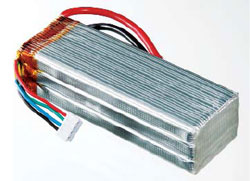
However, in the model and radio control hobbyist world, people often use much more "raw" LiPo batteries, which are simply wrapped in a foil or soft plastic. They are charged with simpler circuits and need a lot more care and attention.

In practice these devices carry a lot of energy, and that makes them dangerous. These "raw" batteries are much more so as it is very easy to charge or discharge them incorrectly and very easy to piece the wrapping or damage them. When damaged they can catch fire, and release that energy. The fire is hard to put out, but usually not long lasting. It can very easily cause secondary fires.

The battery safety aspect of the course covered several areas, and had some nice scary videos of LiPo fires. I did however find some of the points made a tad odd, and I checked the instructions that come with the DJI batteries, and they are interesting. The Phantom 3 batteries have instructions covering things we had on the course, like store with 30% to 50% charge. Though the Phantom 4 batteries have instructions saying 40-65% charge for storage.

On the course they also said these batteries self discharge, and will discharge to an unusable state where the battery cannot be charged. The instructions (Phantom 4) say they discharge to 65% automatically over 3 days and then will hibernate, and can be charged after they have hibernated to get them back.

Comparing the two battery instructions shows that they have improved the batteries a lot from Phantom 3 to Phantom 4, and that may be why the details on the course are somewhat confusing and perhaps simply out of date. Ultimately the course should say READ AND FOLLOW THE INSTRUCTIONS. And especially do not assume the instructions are always the same.

That said, the Phantom 4 instructions do have a troubling couple of points. They say, sensibly, "Make sure the batteries are fully charged before each flight", but also "Never transport a damaged battery or a battery with power level higher than 50%". Err, and if you are going to a field with no power, how do you manage - you have to transport fully charged batteries.

Another odd one for such an intelligent battery system is "DO NOT charge battery immediately after ight, because the battery temperature may be too high". Sensible, as I bet people do that all the time, except why the hell does the intelligent battery system not know it is too hot and simply not start charging until temperature is OK, that way you can "put on charge" right away.

There are good tips on ensuring battery contacts are taped, and better still, batteries are carried in fire-proof LiPo bags or ammo containers.

One thing to always remember with any battery, even in your phone, is that you must not charge or use if the battery is damaged. That is how fires start, and is very dangerous. A damaged battery is unsafe. When you are flying a small aircraft like the Phantom 4, you have to be especially careful if you do have a crash as that can easily cause damage to the battery - making it unsafe, or even starting a fire immediately.

So, take battery safety seriously!

2016-06-29

Scotland

As usual, I am not offering political views as such on the EU issue, but pondering the process and rules.

It seems Scotland and Northern Ireland may both be interested in staying in the EU. It seems some in the EU are not keen. It seems that either of them breaking off from the UK would then be stuck applying like any other country to join the EU.

However, things are not as simple as when considering a legal entity in a contract. I mean, what is the UK as a party to these international treaties exactly? How is a country defined? After all, they change all the time in subtle ways.

So thought experiments:
  • If, say, the Isle of Wight decided to leave the UK, the rest of the UK would still be the UK and still be in the EU (for now). That seems obvious.
  • So what if Wales left? After all, Wales was one of the countries that came together to make the UK a new entity. Would the UK vanish and cease to exist if Wales left? Or would the" residual" UK still be valid and be the UK, and still be the "entity" that is (currently) in the EU?
  • How far could it go? I mean, could Scotland and Northern Ireland join forces, and say they are "the United Kingdom" and that England and Wales are "leaving" the UK, but the residual UK that is Scotland and NI are still the UK and so still members of the EU with no need to renegotiate anything or make new treaties?
Maybe that is far fetched, but let's try a few more...
  • What if NI merged in to Ireland? Would that be OK? Would Ireland remain the same entity as a party to treaties and the EU, just bigger, and hence be, as a whole, an EU member still with NI?
  • What if Scotland decided to join Ireland? Would that be too much and mean Ireland is no longer the same thing?
  • What if a country in the EU now changed its name, e.g. Ireland become the "Celtic Union", and then let Scotland join them as a new combined country and part of the EU member formally known as "Ireland"?
Really, how does it work, and who actually decides? All of the above scenarios are, in theory, no concern of the EU, as they are internal to the various countries (unless EU treaties already contain rules on merging with new countries or splitting).

If I was the SNP I would be asking these questions in all seriousness though.

After all, if Scotland was allowed to “join” Ireland as an EU member, they could operate a “devolved government” system which basically means they are only there for the green card, I mean EU membership, and not really in bed with each other.

2016-06-28

Heads or Tails? Who are your friends now? #EURef

I have not posted a lot on the EU. Indeed, the next day I posted that I would not say a lot on the analysis of the consequences as so many others will be doing that. I also made a comment on the only qualifications to be a voter being that you could spell "X" (something that others pointed out is not actually a requirement!).

I did not actually say which way I voted, and whist it may be obvious to some, I don't plan to.

However, I am really quite concerned at how divisive this whole issue has been, not just in terms of the country but families and friends. It is quite scary really.

Before the vote I was involved in a few discussions with friends. I think it is fair to say that we agreed that there was no real way to know the best way to go, and that probably we will never know which was best in hindsight (in the long term). There are interesting arguments based on the lack of knowledge, like "if we don't know what will happen or which way to vote, you vote for status quo, as what know what that is like now, and it is tolerable even if not ideal, and maybe can be fixed". There are arguments like "If we were not in and we voted you join, would we go in?" Possibly not. Sadly neither of these are actually helpful in making an informed decision, and all of the information we can see is speculative propaganda, and to be frank, in some cases, outright lies on both sides, or so it seemed to me.

Basically, my point is that democracy is clearly not going to work in this case. Don't get me wrong, democracy is pretty much the best we have and overall it works well. It is fundamentally a means to mitigate civil war, something from which almost any other system of government can suffer all too easily. But in some cases, and I could say this whichever way the vote went, democracy is not rational, simply because almost everyone voting did not actually have the experience or qualifications in politics or economics to know the way to vote. The fact that the vote was so close bears that out to some extent. Sadly a system of "rational government", which avoids the risk of civil war, does not really exist, as far as I know.

The one thing I am absolutely not saying is that people are idiots, or that the people that voted one way or the other are idiots. I am not even saying people are racist as I do not expect that people are generally (though a few in the news clearly are). What I am saying to some extent is that we are all not quite idiots, but, uneducated and uninformed, on this specific topic. To be honest I am not sure anyone is an expert in this as nobody else has done it before. This means we all voted on gut instinct or propaganda influence.

What this has led to is some serious talks with a good friend of mine that voted a different way to me, and I really think he is sensible and rational, enough not to let this ruin our friendship. It is however, a lot closer to being an actual issue than I expected. Some long text and talk conversations.

In partly this is down to me - I am not that good at working out when people will be upset by something or not. I am sorry about that. I have perhaps a less conventional sense of humour and so I have liked or retweeted some things I found amusing without thinking whether someone else seeing that would be offended by "my views" inferred by association with the article I liked/retweeted.

When I have strong views, I'll let you know! Right now I have some views on the way things are going, and concerns about them, but I don't have any thoughts that any of my friends, or colleagues or customers have been idiots! That would be silly, and, well, "not logical, Captain". Even my views on where were are now are concerns, not anger, and are around the more technical aspects of "what will happen?" and "what can we do?" not "who's fault was this?". I always try to be pragmatic.

So please, let's all get over any personal attacks, tackle the issue at hand, and work on the way forward. Yes, right now, we have not left, and yes, that is not 100% certain yet, but seems very likely. Even if/when we leave, what that means is up in the air. Heck, we could leave EU, and re-negotiate identical terms with every EU state and so be status quo if they tried hard enough (not likely). What is likely is that if/when we leave a whole load of EU rules (like them or not) will move in to UK law and be just as hard to "fix". They may even be harder to fix than if they were EU regulations, as our own government do seem to be fighting their own people with laws like the IP Bill (something I do have strong views on). Maybe we should have a referendum on the IP Bill :-)

So, please, can we move on and not have a go at friends and relatives who voted the other way - it is almost as bad as getting cross because someone flipped a coin the other way and that is just daft. It is almost as daft as deciding your friends on who likes Marmite?!


P.S. I think I am really lucky - I can debate issues with my friends and resolve issues like this, which I think I have, but I know many people that could not do so and would have a life long rift in friend or family relationships over this. Now that is scary! It really is like if you had a referendum on Marmite: Like or Dislike.

Daft question

During the count, a friend asked if the result was like normal elections where the majority may vote one way in total but when done by constituencies the vote could go the other way.

Some of us found it amusing, and explained that it was a total count and not on constituency lines.

But now it seems things may not be so clear cut. Yes, the referendum was a straight count, but it is just a big opinion poll and not anything with any legal force.

Parliament ultimately will vote on this, and already, some MPs are saying they will vote based on the way their constituency voted. This makes sense given that an MP is there specifically to represent his constituents. Surely that is exactly how he should vote?

So we may yet have a crazy situation of the referendum going one way but the actual vote in parliament going the other.

We should all be used to this as number of votes overall has never been directly related to number of MPs and hence number of votes on any issue in parliament.

We'll have to wait and see...

Clocks

Some time geeks (should I say Time Lords) checked out my clocks. Seems they are impressed, saying sub microsecond. I have spent all day tryi...