Upgrading the power in the house is not something I really expected, but seems like a good idea.
The main driver is the fact my son has a Tesla, and now has a 32A Tesla charger on the wall. It is quite nice technically, can take one or three phase, and can be configured to tell the car how much current it is allowed to draw. Mostly James uses the free supercharger on his way to/from work, but he tops up over night at the house. It makes it very cheap to run (for him, at any rate).
So, having installed the Tesla charger, we can be using 32A extra. That is a lot for a domestic installation, even for a large(ish) house like this one. The first time it was charging at the same time as the tumble dryer it tripped the 80A RCB on one half of the consumer unit. Now, we were not up to 80A, I can be pretty sure of that, and it is an RCB, so it is likely just all of that load from various sources led to just enough leakage current somewhere. Hard to be sure to be honest. Moving off the RCB worked.
There are therefore a couple of concerns. One is the nuisance caused by an RCB that trips half the house. We have computers with disks, a wax printer with melted wax in it, sudden power losses are a nuisance. To be fair, computers are way better at this these days (journalling file systems, etc), but if you are in the middle of something time consuming you can end up starting again. And then there is the possibility that you are playing some on-line game, which, by total fluke, my son and I were doing at the time (I rarely play anything, this was AoE on steam!).
The other concern is the overall current usage, with one device that can draw 32A, and a "commercial" tumble dryer on a 30A circuit, and five air-con units on 16A circuits. One can see this adding up.
So, yesterday was stage 1.
I have had the consumer unit replaced. As per that picture it is all RCBOs. This means each individual breaker is an RCB, rather than a breaker for each half. They are on 100A switches on each half. This is not cheap, and took many hours to do. But now, each circuit will trip independently of the others, which is much cleaner. I also isolated my "Internet" stuff (connection, switches, PoE for WiFi, and security cameras) on to their own circuit. The alarm is already battery backed up. So this means less chance of tripping something taking out the Internet as well.
Also, the tails to the meter were upgraded from 16mm to 25mm to allow for 100A feed.
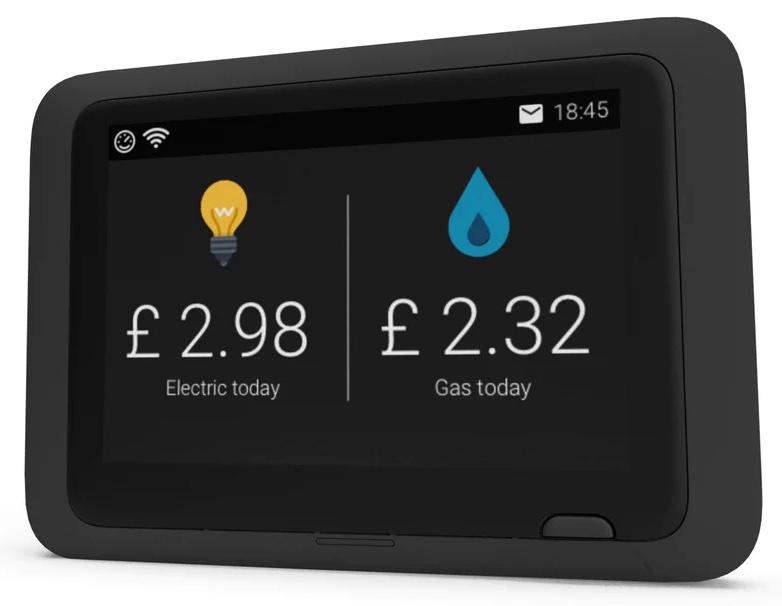
Also, a separate meter was installed on the Tesla circuit so I know how much James is costing exactly.

Stage 2: The next stage is upgrading the tails from fuse to meter - next week. They are also adding an isolation switch, which is nice. All that for £44 from British Gas.
Stage 3: We checked the fuse, and it is marked 100A on the carrier, but is in fact only 60A. Wow, we are way closer to hitting that than we realised. So we need that upgraded. That cannot happen until the tails are upgraded, and they checked the meter is 100A, which it is. So we are good to go for 100A installation...